Reef Station: A Space Station for the Living Ocean
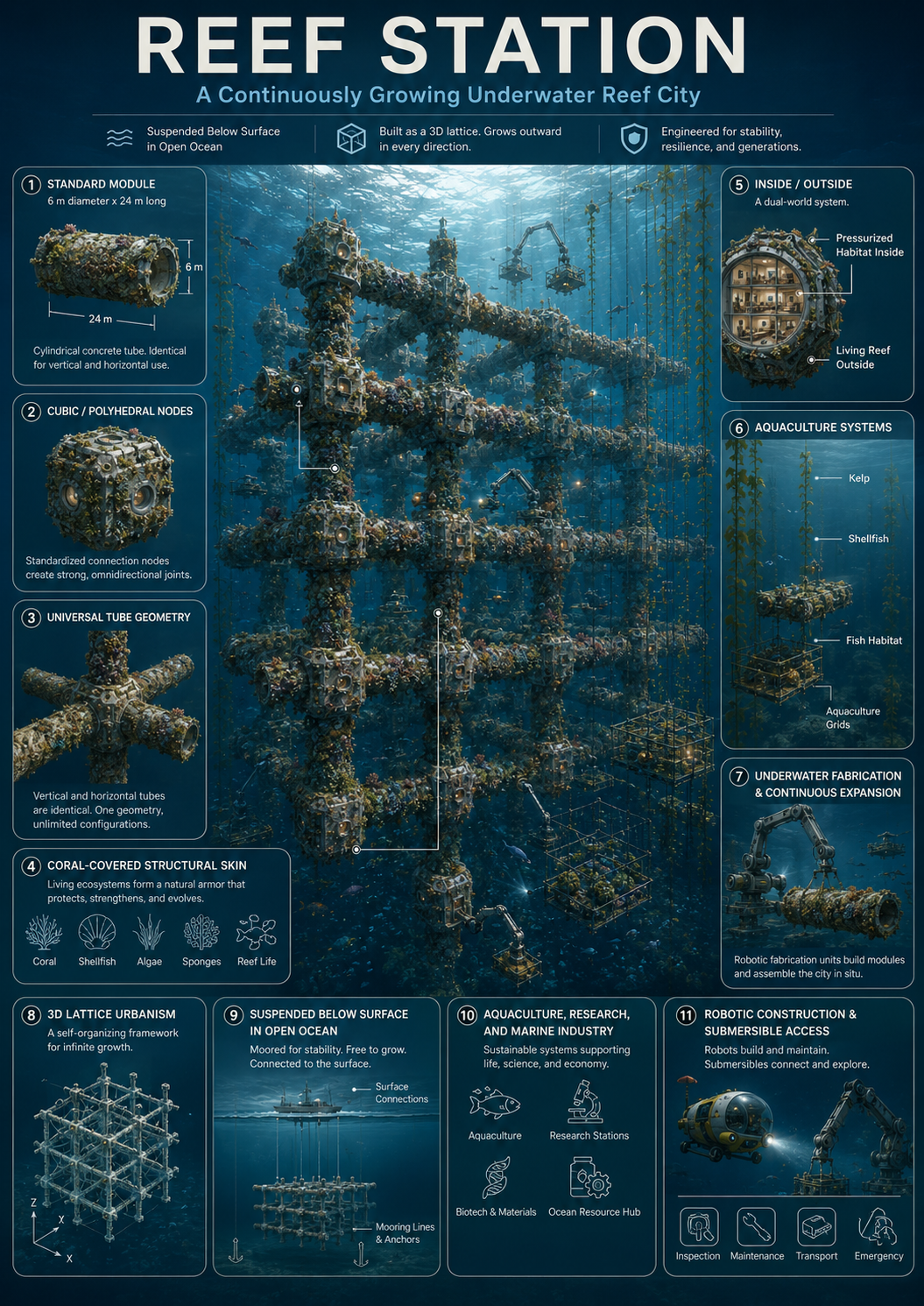
Imagine an underwater city that feels like a space station, but instead of floating in the vacuum of space, it is suspended inside the living ocean.
This concept was partly inspired by the huge NASA training tanks where astronauts rehearse spacewalks underwater. In those environments, you see something amazing: the underwater world can simulate the feeling of weightlessness, the scale of a space station, and the drama of working in three dimensions. But then you realize something even more interesting. Compared to space, the ocean is actually a much friendlier place to work. There is water all around you. There is life. There is buoyancy. There is food potential. There is protection from radiation. There is a whole ecosystem waiting to participate.
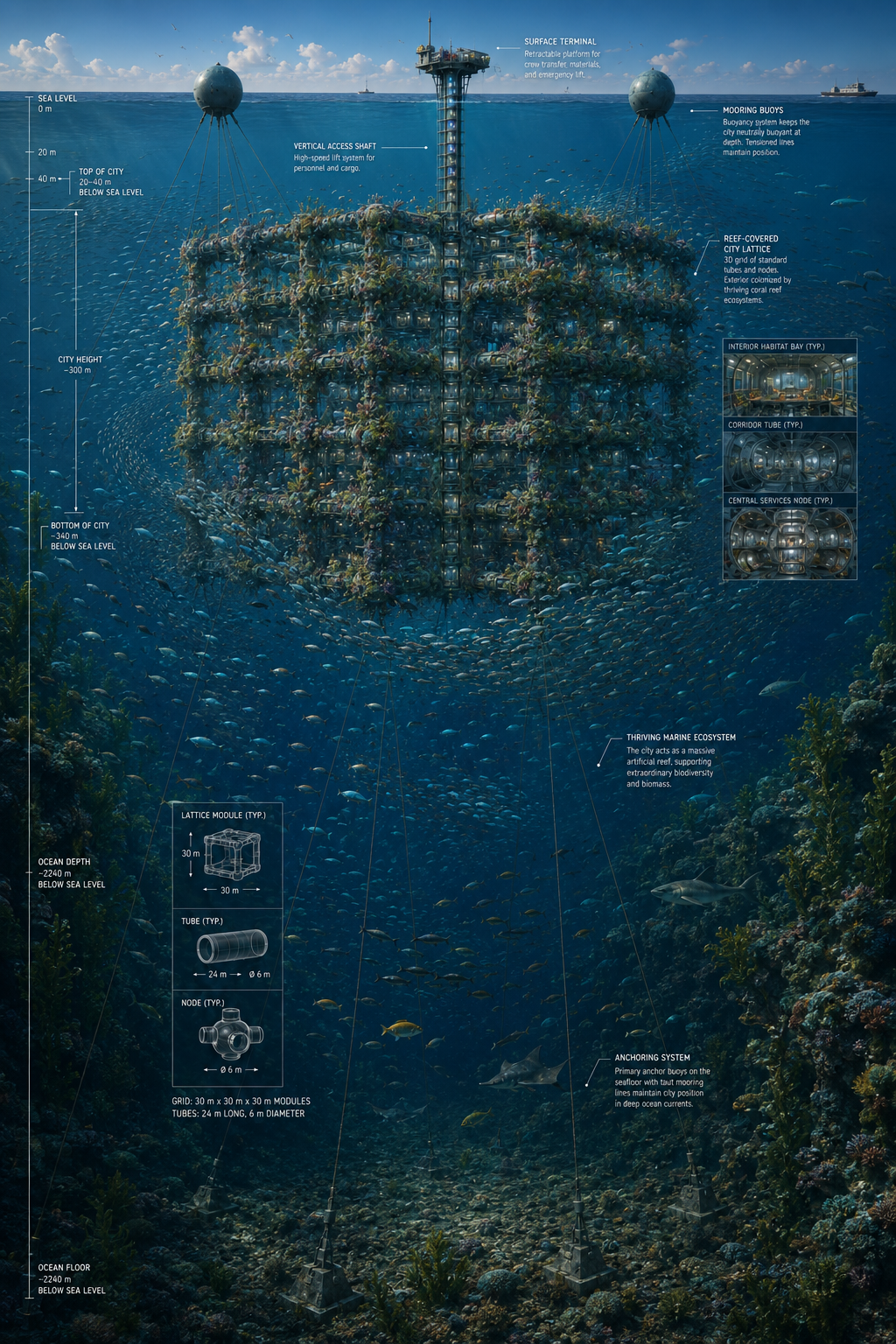
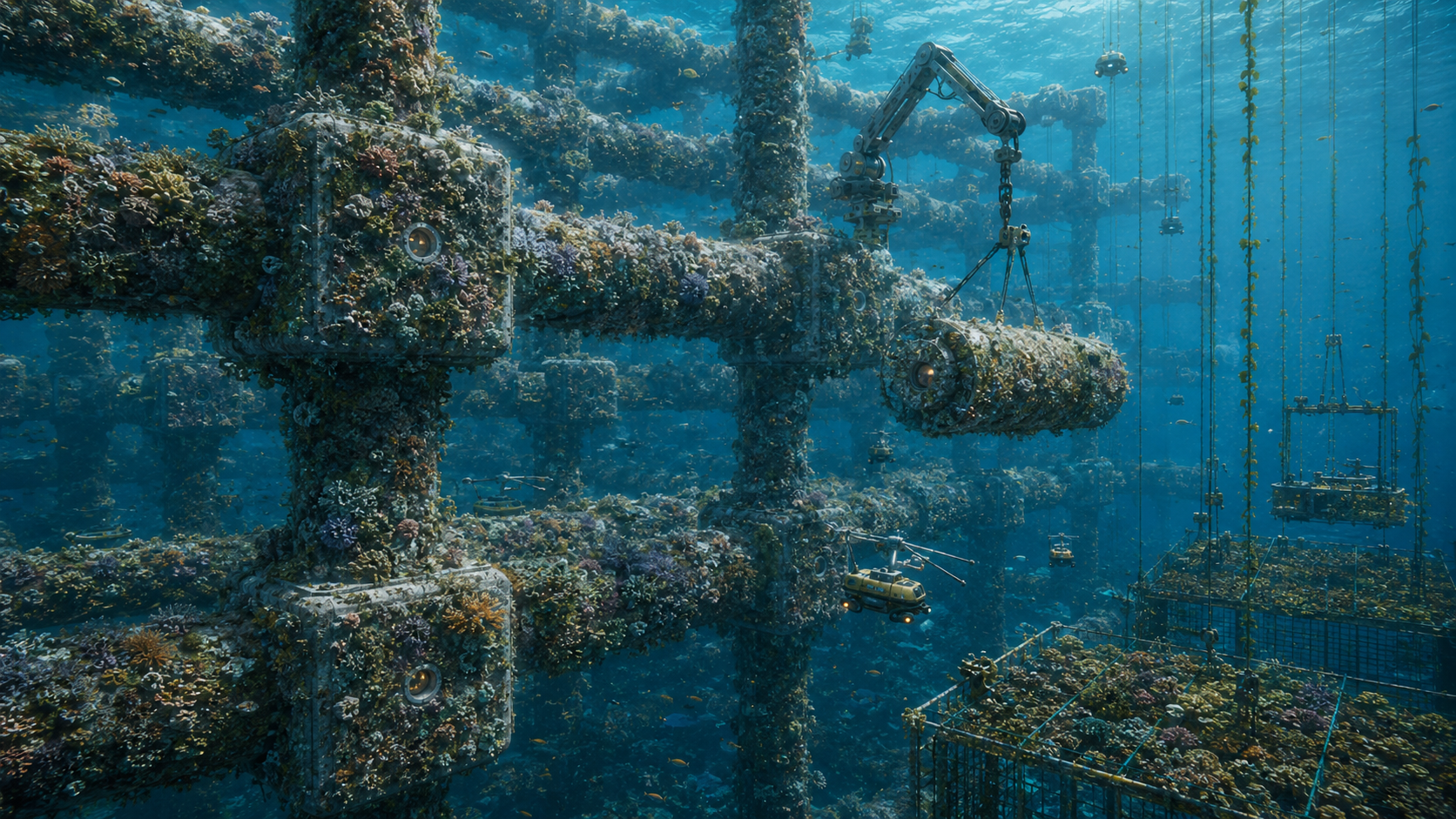
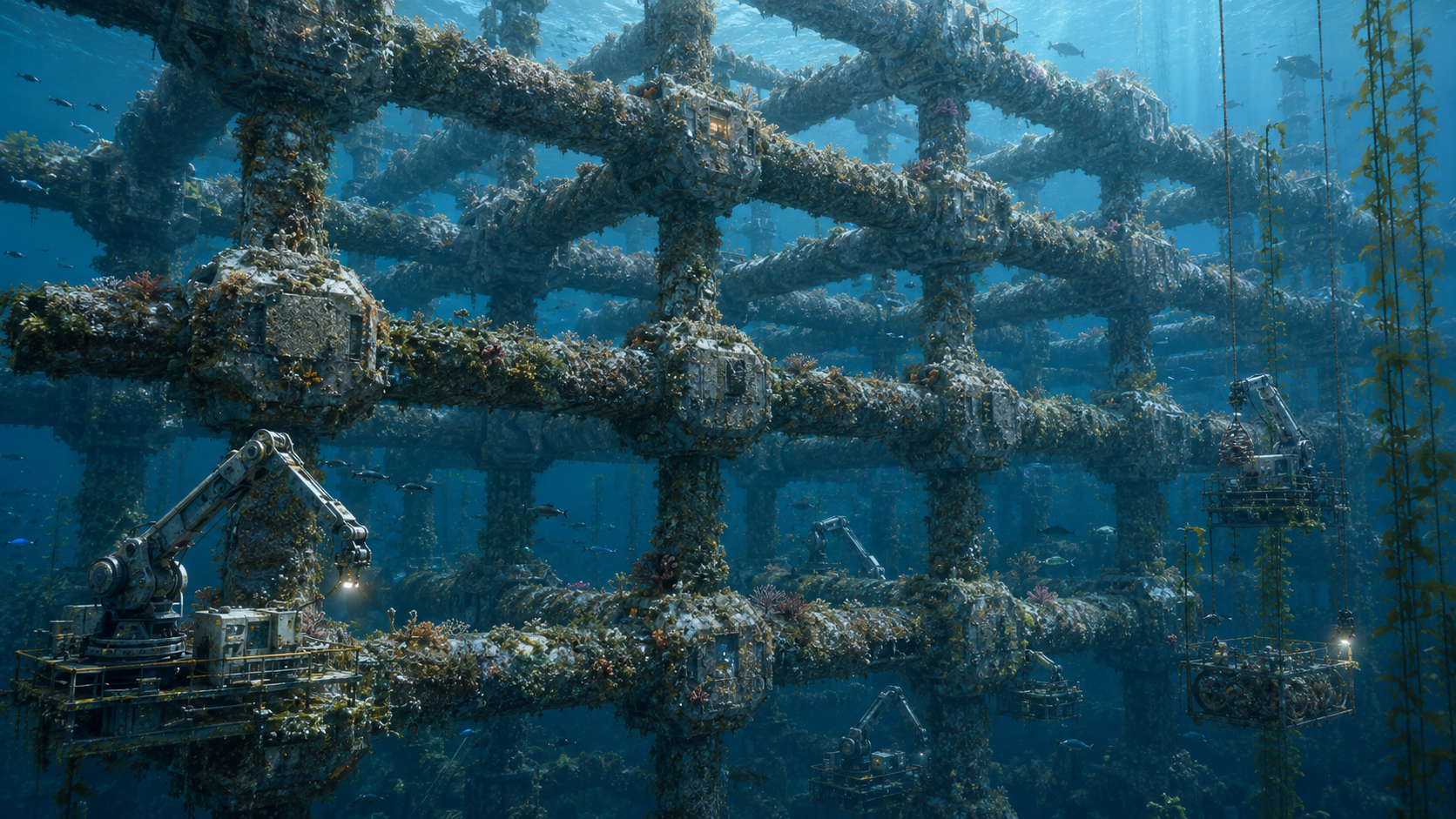
The idea is to build a large floating seastead from standardized concrete tubes and node sections, assembled into a three-dimensional lattice below the surface of the sea. The basic modules are simple: long cylindrical tubes, roughly 4 to 8 metres in diameter and about 30 metres long, connected at larger hub-like nodes. Together, they form a cubic or polyhedral structure that can grow over time, almost like a space station under the ocean.
But the really exciting part is that the city is also a reef.
Instead of treating the ocean as empty space, the entire exterior surface becomes habitat. The tubes are covered in coral, seaweed, mussels, clams, sponges, and other marine life. Around the structure, massive schools of fish move through a managed reef ecosystem. Some areas could be open habitat for native marine life, while other regions could be carefully managed for aquaculture, including shellfish, kelp, seaweed, and even carnivorous fish within fenced reef zones.
This is not just architecture. It is infrastructure, food production, ecological restoration, and settlement all combined.
The city would float 20 to 40 metres below the surface, protected from waves and storms, with a small retractable terminal above the water. Below, the lattice could extend hundreds of metres deep, creating an enormous volume of usable interior space while also supporting a thriving marine ecosystem.
What I love about this idea is that it changes the story of ocean settlement. Instead of a lonely platform sitting on top of the sea, this becomes a submerged neighbourhood, a food-producing reef, a research station, and a living economy.
It has the wonder of a space station, but it belongs completely to Earth.